
Reviewed · NIGHT MARKET TOURS
Street Food Cooking Class in Taipei : Gua Bao/Lu Rou Fan/Boba Tea
Taiwanese street food is better when you make it yourself. This two-hour CookInn Taiwan class gives you a practical introduction to three beloved local treats: gua bao, braised pork, and bubble milk tea. You do not simply watch a chef work. You shape steamed buns, learn how pork gets its deep flavor, and make chewy tapioca pearls by hand.
I like the small group of no more than eight people, since the instructor can help when dough sticks, pearls refuse to cooperate, or your folding technique goes sideways. I also like the useful recipe book, a souvenir that lets you repeat the meal at home. The main consideration is time: two hours moves quickly, and the boba-making portion can be harder than it looks.
The class starts at 2:30 p.m. at CookInn Taiwan’s Zhongshan classroom in Taipei’s Datong District. At $79 per person, it is not the cheapest meal in town, but you are paying for instruction, ingredients, a hands-on activity, and a meal you prepare yourself. The excellent 5 out of 5 rating from 22 ratings, with a 100 percent recommendation rate, fits the experience’s clear appeal.
In This Review
- Key points at a glance
- Why these three dishes matter in Taipei
- Arriving at CookInn Taiwan’s Zhongshan classroom
- Starting with gua bao dough and steamed buns
- Braising pork for lu rou fan
- The boba challenge: chewy pearls from scratch
- Eating the meal you made
- The teaching style and personal attention
- What the $79 price includes in real value
- Who should book this Taipei cooking class?
- Should you book it?
- FAQ
- Where does the cooking class begin?
- What time does the class start?
- How long does the experience last?
- What dishes will I make?
- Does the class include a meal?
- How many people can join?
- Does the class end at the same place where it begins?
- Can I cancel for a refund?
Key points at a glance
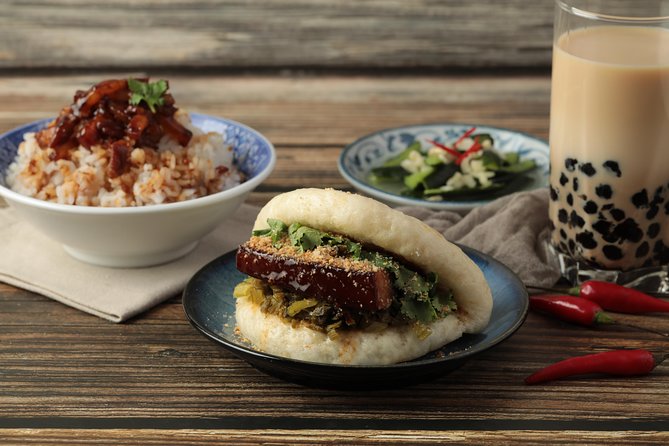
- Three Taiwanese favorites in two hours: Make gua bao, braised pork for lu rou fan, and bubble milk tea.
- Boba pearls from scratch: The tapioca process is fun, useful, and surprisingly demanding.
- A maximum of eight people: The small class size allows more direct help from the instructor.
- Friendly teaching: Angela is praised for clear explanations, patience, and involving children in the work.
- A meal at the end: Sit down and eat the dishes you have prepared instead of leaving with only a demonstration.
- A practical souvenir: The recipe book gives you a way to recreate the food after returning home.
Why these three dishes matter in Taipei
Taiwanese street food is often called xiao chi, meaning small eats. The term covers the modest, filling dishes people grab throughout the day, from bowls of pork over rice to buns folded around rich meat. These foods are simple in appearance, but small details make them work.
Gua bao is sometimes called a Taiwanese hamburger. A soft, steamed bun opens like a pocket around braised pork belly. The contrast is the point: tender, savory pork inside a pillowy bun. Making the bun yourself helps you understand why texture matters as much as seasoning.
Lu rou fan is a bowl of rice topped with braised pork. Here, the pork is the main lesson. Slow braising turns a fatty cut into something soft and flavorful, while the cooking liquid gives the rice its appeal. The class uses prepared rice, so your attention stays on the pork rather than on making a complete rice dish from raw ingredients.
Bubble milk tea adds a different kind of challenge. The tea is familiar around the world, but the chewy tapioca pearls are the part that makes the drink distinctly Taiwanese. Making them from scratch gives you a better sense of the work behind that familiar cup.
More Night Market Tours in Taipei:
- [Private Tour] Shilin Night Market Walking Tour With a Private Tour Guide (2-hr)
★ 5.0 · 123 reviews - Taipei: Street Food & Hidden Eats Night Market Food Tour
★ 4.8 · 112 reviews - Taipei Hidden Eats, Market & Street Food Tour with 8+ Tastings
★ 5.0 · 109 reviews
Arriving at CookInn Taiwan’s Zhongshan classroom
The meeting point is CookInn Taiwan, Zhongshan classroom, at 66 Section 1, Chengde Road, second floor, in Datong District. You should allow enough time to find the building and reach the classroom by the 2:30 p.m. start. The supplied meeting information does not list a hotel pickup or transportation service, so you should plan to make your own way there.
The activity both starts and ends at this location. That is useful if you want to continue exploring Taipei afterward, since you are not left at a separate site or restaurant. It also makes the class easy to fit into a half-day plan.
The mobile ticket is convenient. Keep your booking confirmation available when you arrive. Confirmation is provided at booking, and the class accepts no more than eight people, so the small format is part of the experience rather than a minor detail.
Starting with gua bao dough and steamed buns
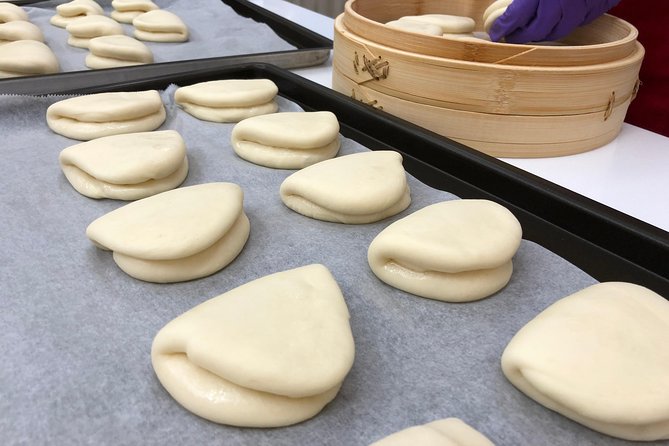
The gua bao portion is likely to be the class favorite. You learn how to make the steamed buns from scratch, then shape them so they can open around the pork. Dough work gives the class a real hands-on edge. You are not just copying a recipe. You are handling the ingredient that determines the bun’s softness and form.
The instructor guides you through the process, which matters for first-time cooks. Homemade steamed buns can be less forgiving than they appear. Dough may need careful handling, and the final shape affects how easily the bun opens. A small class helps here, since the instructor can watch your technique rather than speak only to the room as a whole.
The finished gua bao receives high praise. One assessment calls it the star of the meal, and another describes the food as delicious. I would give this dish your full attention. It is the clearest example of the class turning a famous street-food item into a skill you can try again at home.
The cooking class does not promise restaurant-perfect results from every first attempt, and that is part of its value. A slightly uneven bun is still useful practice. You leave knowing what the dough feels like and how the dish comes together.
Braising pork for lu rou fan
Next comes the pork. You learn the basic method for braising pork belly, the cooking step that gives both gua bao and lu rou fan their savory character. Braising is not flashy, but it is central to Taiwanese home cooking. The goal is tender meat and a sauce with enough depth to flavor rice and bun alike.
The class lets you see how one preparation can serve two classic dishes. That is a smart use of limited time. Instead of preparing three unrelated recipes, you learn a pork technique and then understand how it fits into different street-food formats.
For lu rou fan, the pork is served over prepared rice. This keeps the class within its two-hour schedule, though it also means you are not learning every part of the rice bowl from the very beginning. If you hoped to cook the rice as well, adjust your expectations. The focus is the braised topping.
The pork may not receive quite the same praise as the gua bao, but it remains an important part of the lesson. The class shows you that a beloved rice bowl depends on patient cooking and balance, not just on adding a sauce to meat. At the end, you can compare the pork in the bun with the pork over rice and notice how the same preparation works in two different ways.
More Cooking Classes in Taipei:
- Xiao Long Bao, Beef Noodles & Boba Tea Cooking Class in Taipei
★ 5.0 · 159 reviews - Xiao Long Bao, Chicken vermicelli with mushroom and sesame oil, Tofu strips salad, Bubble milk tea. Taiwan Traditional Delicacies Experience-A (Taipei Cooking Class)
★ 5.0 · 79 reviews - Taipei Cooking Class & Market Adventure in Historic Dadaocheng
★ 5.0 · 77 reviews - Xiao Long Bao & Boba Tea Cooking Class in Taipei
★ 5.0 · 28 reviews
The boba challenge: chewy pearls from scratch
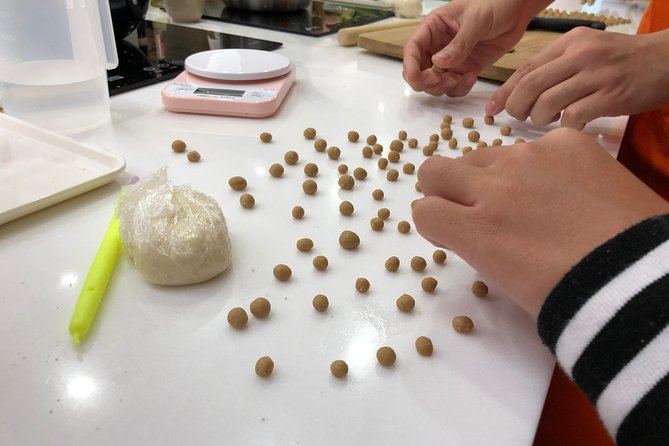
Making bubble tea sounds easy until you make the pearls yourself. The class teaches you to prepare the chewy tapioca balls from scratch, then shake your own cup of bubble milk tea. This is one of the more unusual parts of the experience because many people know boba only as a finished drink.
The process can be difficult. A participant describes it as an amazing process that is also very hard. That is useful warning, not a flaw. The pearls require care, and their texture is the whole point. If the result is not perfectly uniform, you still gain a better understanding of why freshly made boba has a particular chew.
The drink provides a lighter finish after the pork dishes. You get to handle the pearls, prepare the milk tea, and shake the cup yourself. That final action gives the activity a playful close, especially for children and first-time cooks.
The class is suitable for families. Angela is specifically praised for patiently involving children ages 8, 10, and 11 in every part of the work. Since the group is small, children can take part rather than standing at the back and watching adults do everything. Parents should still expect a real cooking class, not a passive craft session.
Eating the meal you made
The class ends with a sit-down meal. You eat the gua bao, lu rou fan, and bubble milk tea after preparing them. This matters because cooking instruction can feel incomplete when you leave before tasting the finished dishes.
Eating at the end also helps you judge the results. Was the bun soft enough? Did the pork become tender? Are the tapioca pearls chewy without being too firm? These are practical questions, and the meal gives you a chance to connect the techniques with the flavors.
You should arrive ready to eat. The class is built around a meal, not a series of tiny samples. If you are planning another major meal immediately afterward, allow for the fact that you will finish with several filling Taiwanese dishes.
The meal is also social without requiring a large crowd. With up to eight people, you have a chance to work alongside others and compare results. A three-person group has also been accommodated, so the atmosphere can remain personal rather than crowded.
The teaching style and personal attention
A good cooking class depends on the instructor more than on the menu. Angela receives particular praise for being friendly, capable, interesting, and clear when explaining each step. That combination suits this class well. Taiwanese food can seem unfamiliar at first, so clear guidance helps you understand not only what to do, but why.
The teaching is described as fun and informative, with recipes that are easy enough for a broad range of cooking abilities. You do not need to arrive as an experienced home cook. The class is designed around participation, and the instructor’s job is to help you through the stages.
The small-group limit of eight is one of the strongest practical features. If you have ever taken a cooking class where the instructor demonstrates at the front while half the room struggles to see, you will understand the advantage. Here, there should be more room for questions and correction.
Still, the two-hour limit means the pace may feel brisk. You are making several components in one session, and some steps may be prepared ahead to keep the schedule workable. That is a reasonable tradeoff, but people looking for a slow, detailed culinary course should know this is a compact introduction.
What the $79 price includes in real value
At $79 per person, the class costs much more than buying gua bao, pork rice, and bubble tea from Taipei’s street stalls. If your only goal is to eat cheaply, skip the class and spend the money on several casual meals instead.
The value comes from the added parts: instruction, ingredients, a small class, the chance to prepare food yourself, and the final meal. You also receive a recipe book, which gives the experience a life beyond the afternoon. That souvenir may be especially useful if you want to recreate the dishes for family or friends.
I see the price as reasonable for someone who values participation and food skills. It is less compelling for a person who prefers to sample as many dishes as possible or who has very little interest in cooking. The class is a food experience with a meal attached, not simply a meal with a little entertainment.
The recipe book improves the value. Gua bao and braised pork are the sort of dishes you may want to repeat after returning home, and written instructions are more useful than trying to remember every step from a short demonstration.
Who should book this Taipei cooking class?
I would recommend it to first-time visitors who want more contact with Taiwanese food culture than a restaurant meal provides. It also suits people who have already eaten these dishes and now want to understand how the buns, pork, and pearls are made.
Families are a strong match, based on the way children were included in the cooking. Couples, friends, and small groups should also enjoy the format. The food is familiar enough to be approachable, but the from-scratch boba and steamed buns give the session something different from a standard recipe lesson.
You may want to choose another activity if you dislike group instruction, have no interest in eating pork, or want a longer professional-style course. The menu centers on pork belly, and the class has a fixed two-hour structure. It is also not a broad survey of Taiwanese cuisine. You learn a focused set of street-food classics.
The 2:30 p.m. start works well between sightseeing and dinner. Since the class ends at its starting point, you can continue your Taipei plans afterward. Just remember that the class requires a minimum number of people to run. If that minimum is not met, CookInn Taiwan offers another date or experience, or a full refund.
Should you book it?
Book this CookInn Taiwan class if you want to learn by doing. The best reasons are the small group, friendly instruction, homemade gua bao buns, and the chance to make boba pearls from scratch. The gua bao is likely to be the highlight, while the boba provides the most memorable challenge.
Skip it if you are watching every dollar, prefer a simple street-food crawl, or want to cover a wider range of dishes. For everyone else, $79 buys more than lunch. It buys a useful cooking lesson, a filling meal, and a recipe book that may help bring a piece of Taipei into your own kitchen.
Free cancellation is available if you cancel at least 24 hours before the 2:30 p.m. start time. Changes or cancellations made later are not refunded or accepted, so keep that deadline in mind before booking.
FAQ
Where does the cooking class begin?
The class begins at CookInn Taiwan’s Zhongshan classroom at 66 Section 1, Chengde Road, second floor, in Datong District, Taipei.
What time does the class start?
The class starts at 2:30 p.m.
How long does the experience last?
The cooking class lasts approximately two hours.
What dishes will I make?
You will learn to make gua bao steamed buns, braised pork used for gua bao and lu rou fan, and bubble milk tea with tapioca pearls made from scratch.
Does the class include a meal?
Yes. You sit down and eat the food prepared during the class.
How many people can join?
The activity has a maximum of eight people.
Does the class end at the same place where it begins?
Yes. The activity ends back at the CookInn Taiwan meeting point.
Can I cancel for a refund?
You can cancel at least 24 hours before the experience start time for a full refund. Cancellations or changes made less than 24 hours before the start time are not accepted or refunded.
More Food in Taipei
- Traditional Old School Taiwanese Food Tour
★ 5.0 · 36 reviews - Taipei Street Food & Night Market Tour with a Local: Private & Custom
★ 4.5 · 35 reviews - Yansan Night Market Food Tour
★ 5.0 · 30 reviews - Best E-bike Cycling Tour in Taipei – Includes Local Food & Drinks
★ 5.0 · 19 reviews
More Food Tours in Taipei
- The Award-Winning Private Food Tour of Taipei: The 10 Tastings
★ 5.0 · 716 reviews - Taipei: Food Tours w/ Top 10 Taiwan Food (Breakfast/Dinner)
★ 4.7 · 517 reviews - Taipei: Private Food Tour – 10 Tastings with Locals
★ 4.9 · 218 reviews - Taipei Food Tour: Night Market & Convenience Store(Food Included)
★ 4.5 · 100 reviews
Just listed around Taipei
- Vintage Taipei – Best of Taiwan and Sunset Walking Tour★ 5.0 · 4 reviews
- One Day Tour of Yilan, Zhang Mei Ama Farm★ 5.0 · 2 reviews
- Private Yangmingshan National Park Hiking Day Tour from Taipei★ 5.0 · 5 reviews
- Yilan 1-Day Private Tour to Kavalan Whisky & Cultural Gems★ 4.5 · 3 reviews
- Keelung Shore Excursion: Private 6H Natural Wonder & Seafood Tour★ 5.0 · 3 reviews
- One-day Yangmingshan NP Beitou Hot Spring Park and Tamsui Tour Package★ 5.0 · 2 reviews
- Yangmingshan National Park & Hot Spring Tour (afternoon )★ 3.0 · 2 reviews
- Best of Taiwan 9 Days Tour★ 3.5 · 3 reviews
Night Market Tours, compared.

Shilin Night Market Walking Tour With a Private Tour Guide (2-hr)
Read our review →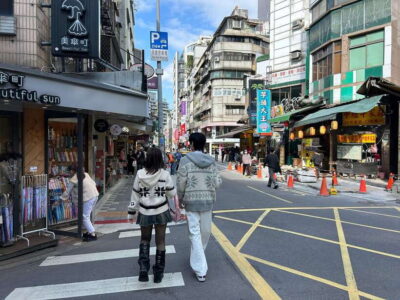
Street Food & Hidden Eats Night Market Food Tour
Read our review →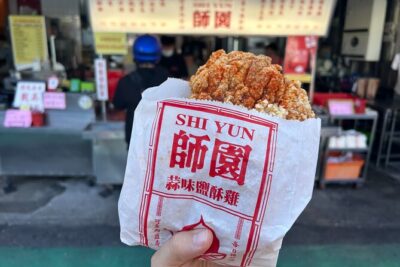
Taipei Hidden Eats, Market & Street Food Tour with 8+ Tastings
Read our review →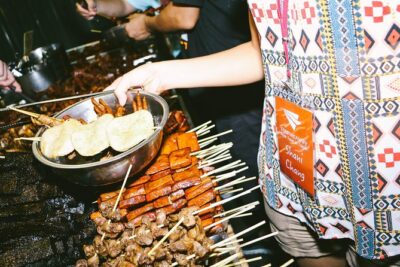
Taipei Food Tour: Night Market & Convenience Store(Food Included)
Read our review →
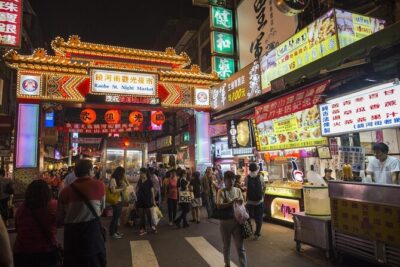
2-hr Raohe Night Market Walking Private Tour with a Tour Guide
Read our review →
7-Hour Jiufen Night View, Shifen Waterfall & Raohe Market Tour
Read our review →
Taipei Street Food & Night Market Tour with a Local: Private & Custom
Read our review →Browse the lists this tour appears in