

Reviewed · TAIPEI LANDMARKS & OLD TOWN
Taipei: Old Town Walking Tour
Taipei’s story unfolds block by block. This 2.5-hour walk links the city’s grand civic buildings with the busy streets of Ximending, giving you a useful first look at Taiwan’s capital. I like the clear route from the National Museum of Taiwan to the Presidential Office, Zhongshan Hall, and the Red House. I also like the focus on history, especially the explanation of the 228 tragedy, rather than a simple photo stop tour. The main consideration is that you will cover several areas on foot, so this works best when you are ready for a steady city walk.
I especially appreciate the way the tour connects old government buildings with everyday markets. The guides have also earned strong praise for their English, energy, and ability to make difficult history easier to discuss. Leo is described as passionate and lively, while Ale is praised for her relaxed style and for encouraging questions. If you want a private group, that option is available, though the experience may be most useful when you can ask the guide to adjust the pace and explain the subjects that interest you most.
In This Review
- Key things to know before you go
- A useful first walk through Taipei’s old town
- Starting at NTU Hospital Station Exit 4
- National Museum of Taiwan and the old city center
- 228 Peace Memorial Park and a difficult chapter
- The Presidential Office and Taipei’s public face
- Markets, Zhongshan Hall, and changing city life
- Ximending and the red-brick Red House
- What the guides add to the experience
- Price, timing, and practical value
- Who should book this old-town walk
- Should you book it?
- FAQ
- Where does the Taipei Old Town Walking Tour meet?
- How long does the walking tour last?
- What language is the tour offered in?
- Which major landmarks are included?
- Does the tour explain the 228 tragedy?
- Is the tour wheelchair accessible?
- Can I book a private group?
- How much does the tour cost?
- Can I cancel or pay later?
Key things to know before you go
- The route begins near NTU Hospital Station: Meet at Taipei Metro NTU Hospital Station Exit 4, at street level.
- The history is the main attraction: You will hear about the 228 tragedy and the events that helped shape modern Taiwan.
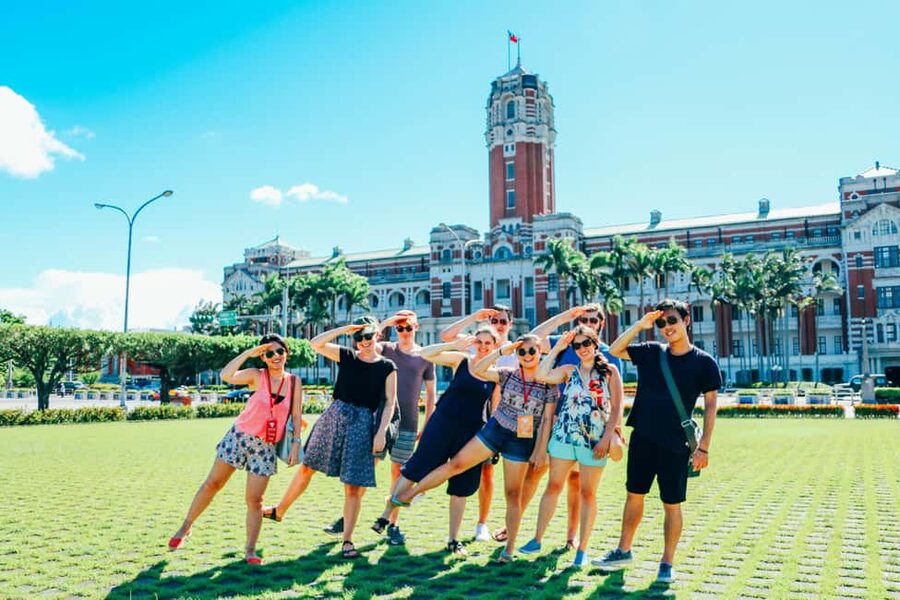
- The walk covers major civic landmarks: Stops include the National Museum of Taiwan, 228 Peace Memorial Park, the Presidential Office, and Zhongshan Hall.
- Ximending provides a lively finish: The tour ends near markets, shops, and the octagonal Red House.
- English is the tour language: The guides are praised for clear explanations, strong memories, and an easy manner.
- The listed price is strikingly low: At $1.10 per person, it offers remarkable value if that rate is available for your date.
A useful first walk through Taipei’s old town
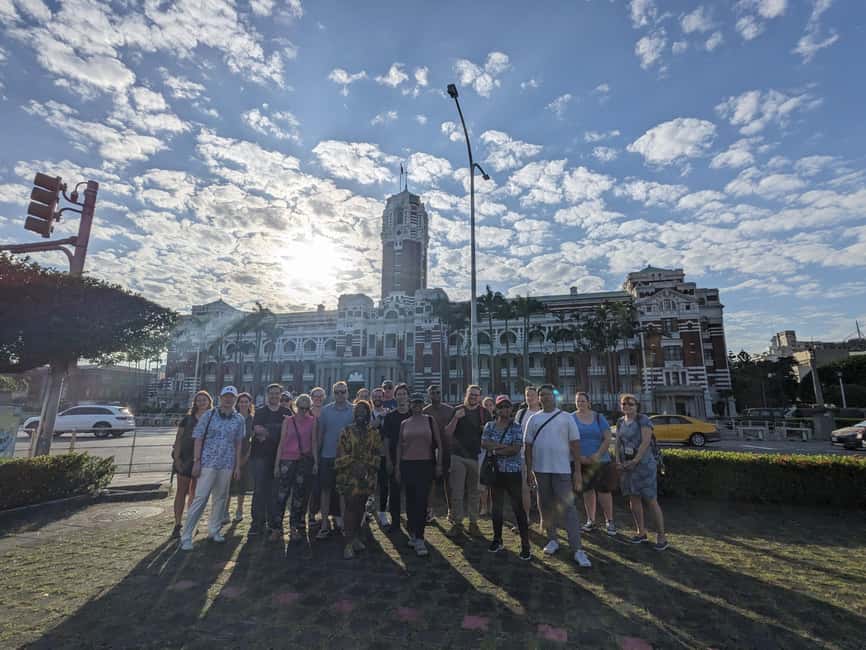
I see this tour as a history walk with a city-market finale. It does not try to cover every famous Taipei attraction. Instead, it concentrates on the old town around Ximen, where public buildings, political memory, shopping streets, and older commercial sites sit within a walkable area.
That focus makes the experience useful early in a Taipei visit. You get a basic map in your head, learn why certain places matter, and finish in an area where you can continue exploring on your own. I like tours that give you context before you start rushing between attractions, and this one is built for that purpose.
The route lasts about 2.5 hours. That is enough time for several stops and explanations without taking up a full day. You should still expect a fair amount of walking, with time spent outdoors and at public landmarks. The tour is listed as wheelchair accessible, which is helpful, but it is wise to confirm the exact route and conditions for your booking if you need a fully step-free experience.
More Taipei landmarks and old-street walks:
- Taipei: Taipei 101 Observatory Deck Entry Ticket
★ 4.6 · 847 reviews - Taipei: Classic Landmarks Day Tour
★ 4.8 · 183 reviews - Taipei: Taipei 101 Observatory – Skyline 460 Cloud Walk
★ 4.3 · 36 reviews
Starting at NTU Hospital Station Exit 4
Your meeting point is Taipei Metro NTU Hospital Station Exit 4, at street level. This is a practical starting place because you can reach it by metro instead of trying to find a small storefront or hotel lobby.
I recommend arriving with enough time to get out of the station and orient yourself. The meeting point is given with a Google Maps location and coordinates, so use those details rather than relying only on the tour name. The supplied location information identifies the activity with Taipei, while the summary also mentions Nantou County, so checking the map and booking details before setting out is a sensible precaution.
From the station, you follow the guide into the old town of Ximen. The walk begins with civic and historical sights rather than food tasting or shopping. That tells you what to expect: this is a guided introduction to Taipei’s past, not a night-market food tour or a visit to Taipei 101.
National Museum of Taiwan and the old city center
One of the first stops is the National Museum of Taiwan. You pause here rather than simply walking past, giving the guide time to explain its place in the city and Taiwan’s story.
The value of this stop is not only the building itself. A museum can give you a starting point for understanding the island’s natural, cultural, and political development, even when your visit is brief. Since the tour does not state that an interior museum visit or admission ticket is included, I would treat this as an exterior stop unless your guide confirms otherwise.
That distinction matters. If you want a full museum visit, you may need separate time and admission arrangements. If you mainly want orientation, the stop should work well, especially because it leads into several nearby sites with more direct political meaning.
228 Peace Memorial Park and a difficult chapter
The walk continues through 228 Peace Memorial Park, where the guide discusses the 228 tragedy. This is one of the most important parts of the experience, and it gives the tour more weight than a standard old-town sightseeing loop.
The 228 tragedy is a painful episode in Taiwan’s modern history. The supplied tour information does not provide a detailed lecture outline, so I would not expect an academic seminar. Instead, you can expect a guided explanation of the event and its importance as you walk through the area.
This is also where a good guide matters most. Historical subjects tied to political violence and public memory need clear language and a calm tone. Feedback about guides such as Ale, Leo, and Vincent suggests that the experience benefits from guides who can explain facts while keeping the group comfortable enough to ask questions.
I like that this subject is placed within the walk rather than treated as a detached fact. You are seeing the city while learning how its past affects present-day identity. That connection can help you understand Taiwan beyond food, temples, shopping, and scenic day trips.
More Walking Tours in Taipei City:
- Taipei: 2-Hour Raohe Night Market Walking Tour
★ 4.6 · 69 reviews - Taipei: Highlight Attractions Walking Tour
★ 4.6 · 13 reviews - Taipei Private Walking Tour with a Local
★ 5.0 · 11 reviews - Taipei Foodie + History Walking Tour
★ 5.0 · 10 reviews
The Presidential Office and Taipei’s public face
Next, the route passes the Presidential Office. The building is noted for its architecture, so this is both a political and visual stop.
The Presidential Office gives you a look at the formal side of Taipei. It represents the government at the center of national life, while the streets later in the tour show the city in a more casual, commercial mood. That contrast is one of the route’s best features.
I would expect the guide to explain what makes the building important and point out architectural details that are easy to miss when you pass alone. You should not assume that the tour includes entry inside the Presidential Office. The information describes seeing the building from the route, not an interior visit.
For me, this is a good example of why a local guide adds value. A photograph can record a facade, but it does not explain why that facade matters or how it fits into Taipei’s political story. The guide supplies that missing layer.
Markets, Zhongshan Hall, and changing city life
After the government district, you head toward city markets, where stalls sell souvenirs and other goods. This section gives the walk a more everyday feel. You move from official buildings into a commercial setting where Taipei’s old-town rhythm is easier to see.
The market stop is not presented as a dedicated shopping session, so I would keep your expectations modest. You may have time to look around, but the main purpose is to follow the route and understand the area. If you find something worth buying, keep an eye on the clock so you do not hold up the group.
The next major stop is Zhongshan Hall. This historic building once served as a public auditorium. Its former civic role adds another piece to the story of how Taipei used public buildings for political, cultural, and social life.
I like the placement of Zhongshan Hall after the markets. It creates a useful change of pace. You first see the city as a place of trade, then consider a building designed for public gatherings. The guide can help you connect these places instead of treating them as unrelated stops.
The experience does not promise entry into Zhongshan Hall, so plan on seeing the building and hearing its story from the route. If you want to explore inside, ask the guide whether that is possible during your time.
Ximending and the red-brick Red House
The walk continues into Ximending, one of Taipei’s best-known shopping districts. Here, the atmosphere shifts again. The area is associated with shops, markets, entertainment, and crowds, giving you a lively contrast to the quieter historical explanations earlier in the route.
Ximending works well as the final neighborhood because it leaves you with choices. After the tour, you can continue looking at shops, search for food, or use the metro to reach another part of Taipei. The tour itself does not include food or shopping purchases, so budget separately if you plan to stay.
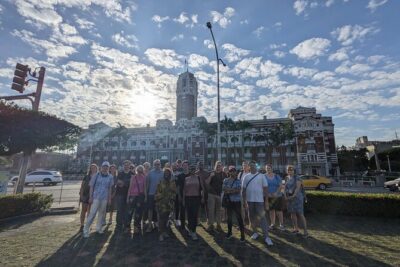
The final landmark is the Red House, a red-brick Western-style building shaped like an octagon. It was the city’s first public market, which makes it more than a photogenic building. Its former use connects neatly with the earlier market stop and helps show how commerce changed over time.
The octagonal design is an easy detail to remember, and it gives the tour a clear ending point. You finish with a place that links architecture, trade, and Ximending’s modern identity. I find that stronger than ending at a generic shopping street.
What the guides add to the experience
The guide may be the biggest factor in how much you enjoy this tour. The English-language experience has received a high overall rating of 4.8 from 25 reviews, with repeated praise for factual explanations, strong memory, energy, and an approachable manner.
Leo is described as passionate, informative, and energetic. Ale is praised for presenting a concise but broad account of Taiwanese history, while her relaxed style helped create room for questions and discussion. Vincent is also singled out as an excellent guide.
One English-language review came from a Portuguese-speaking participant who said the explanation was easy to follow despite Portuguese being their first language. That is useful if you worry about accents or complex historical vocabulary. Still, every guide has a different style, and the exact guide for your date may not be known until booking.
I would use the walk to ask questions. The tour covers a lot in 2.5 hours, so you may not receive every detail about every building. A direct question about the 228 tragedy, Zhongshan Hall, or the Presidential Office can help you get more from the time.
Price, timing, and practical value
The listed price is $1.10 per person. At that amount, the value is hard to question if the displayed price remains available when you book. You are paying very little for a guided route through several significant areas, especially when the main benefit is the guide’s explanation rather than an expensive ticketed attraction.
The price does not appear to include museum admission, food, shopping, or entry into the landmarks. That is not a serious weakness, because the tour is designed around walking and interpretation. You should simply avoid treating the fee as a package that covers additional purchases.
The tour runs for 2.5 hours, and starting times depend on availability. English is the listed language. A private group is available, which may suit families or friends who want to ask more questions and set a more comfortable pace.
You can cancel up to 24 hours in advance for a full refund, and the reserve-now, pay-later option keeps your plans flexible. These policies are useful in Taipei, where weather and changing day plans can affect how much walking you want to do.
Who should book this old-town walk
I would recommend this experience to first-time visitors who want a broad introduction to Taipei’s central history without giving up half a day. It also suits anyone who prefers public buildings and political history over a shopping-only route.
The tour is a good fit if you enjoy learning while walking and are comfortable moving between several stops. It may be less suitable if you want long indoor visits, a food-focused outing, or a slow photo tour with lots of free time.
Families can benefit from the short duration and varied route, though younger children may find the historical discussion demanding. A private group could help if you need to move slowly or want the guide to adjust the discussion.
I would also consider it for a later arrival in Taipei, provided the available time fits your schedule. Ending in Ximending gives you an easy place to continue the evening, but the exact tour timing should be checked before you book.
Should you book it?
Book this tour if you want Taipei’s main old-town landmarks explained in one walk, with special attention to the 228 tragedy and the city’s changing public life. The route is compact, the price is unusually low, and the guide quality appears to be a major strength.
Skip it if your priority is Taipei 101, temples, mountain views, or street food. This is a civic-history walk through the National Museum area, 228 Peace Memorial Park, the Presidential Office, Zhongshan Hall, and Ximending. For a first look at how Taipei became the city you see today, I think it is a smart and affordable choice.
FAQ
Where does the Taipei Old Town Walking Tour meet?
Meet at Taipei Metro NTU Hospital Station Exit 4, at street level. A Google Maps link and coordinates are provided for the meeting point.
How long does the walking tour last?
The tour lasts 2.5 hours. Starting times depend on availability.
What language is the tour offered in?
The live tour guide speaks English.
Which major landmarks are included?
The route includes the National Museum of Taiwan, 228 Peace Memorial Park, the Presidential Office, Zhongshan Hall, Ximending, and the Red House.
Does the tour explain the 228 tragedy?
Yes. The guide discusses the 228 tragedy while you explore 228 Peace Memorial Park and the surrounding old town.
Is the tour wheelchair accessible?
The activity is listed as wheelchair accessible.
Can I book a private group?
Yes. A private group option is available.
How much does the tour cost?
The listed price is $1.10 per person. Check the current price and availability for your chosen date.
Can I cancel or pay later?
You can cancel up to 24 hours in advance for a full refund. The reserve-now, pay-later option allows you to book without paying immediately.
Just listed around Taipei City
- Vintage Taipei – Best of Taiwan and Sunset Walking Tour★ 5.0 · 4 reviews
- Taiwan Taipei: Quick Photoshoot with Taiwan Photographer★ 5.0 · 9 reviews
- Taiwan Museum, MOCA Taipei & Miniatures Museum Entry Tickets★ 4.4 · 2 reviews
- Taipei: Taiwan Traditional Breakfast & Market & Tea Tasting★ 5.0 · 6 reviews
- Taipei: Unlimited FunPass – Transports & Attractions Pass★ 4.5 · 14 reviews
- Taipei: Yangmingshan, Shifen, Jiufen & Yehliu Private Tour★ 4.9 · 11 reviews
- Taipei: Yangmingshan National Park Half-Day Tour★ 4.3 · 12 reviews
- Taipei Private Custom Tour with a Local: Icons & Hidden Gems★ 3.7 · 6 reviews
Taipei Landmarks & Old Town, compared.


Priority Pass Taipei 101 Observatory Deck Ticket
Read our review →
Taipei City Morning Tour with National Palace Museum entry
Read our review →
Taipei Old Town – Taiwan Introduction Walking Tour (Tip-Based)
Read our review →
Morning City Tour with National Palace Museum Entry
Read our review →
Yehliu & Jiufen & Shifen Day Tour (Departure from Ximending)
Read our review →Browse the lists this tour appears in