
Reviewed · TAIPEI LANDMARKS & OLD TOWN
Taipei’s Origin & Longshan Temple – Taiwan Cultural Tour
Stories make a temple come alive. This 2.5-hour walking tour links Taipei’s beginnings with the colorful religious world of Longshan Temple, using folk tales, old customs, and everyday Taiwanese beliefs to explain what you see. I like the focus on local stories rather than a quick photo stop, and I like that the English-speaking guide explains rituals such as throwing moonstones and asking the gods for guidance. The main consideration is that the $1 booking price does not include the guide’s tip, so you should plan to pay more if the experience feels worthwhile.
This is a small-feeling, human way to meet Taipei. The tour looks at how people in Taiwan dealt with illness before modern doctors, how folk gods came to oversee different parts of life, and how Buddhism and Taoism share space at Longshan Temple. The listed location says Nantou County, but the meeting point is clearly in Taipei at Longshan Temple Station Exit 1, so check the booking details carefully before you go.
In This Review
- Key points to know before you book
- Starting at Longshan Temple Station Exit 1
- Why Taipei’s origins matter here
- Entering Longshan Temple’s world of folk gods
- Learning the moonstone ritual
- Stories about illness before modern doctors
- What the guide adds to the experience
- Is the $1 price really good value?
- Timing, meeting point, and the location question
- Who will enjoy this walking tour most?
- Practical advice for making the most of it
- Should you book Taipei’s Origin and Longshan Temple tour?
- FAQ
- Where does the tour start?
- Where does the activity end?
- How long does the tour last?
- What language is the tour in?
- Is the guide’s tip included in the $1 booking fee?
- What does the tour explain about Longshan Temple?
- Can I learn how to use moonstones?
- Which folk gods are discussed?
- Can I cancel the booking?
Key points to know before you book
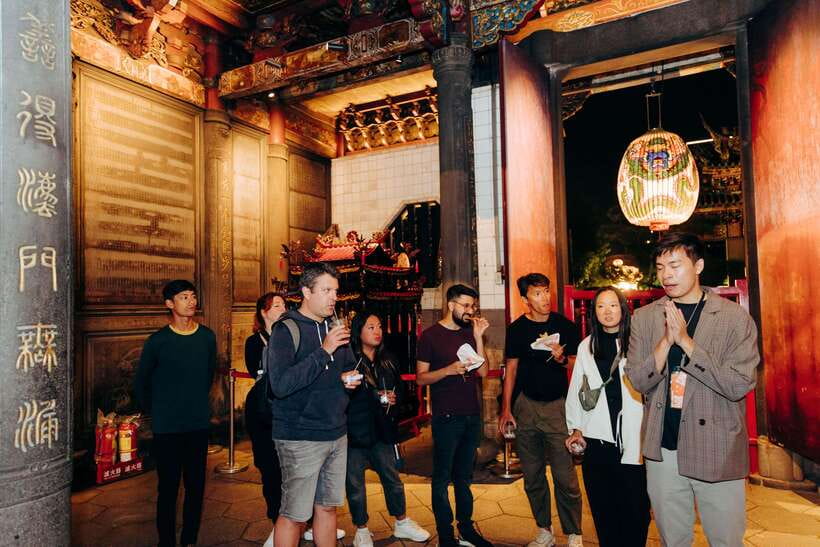
- Longshan Temple’s many gods: More than 100 folk gods are honored here, each connected with different needs, worries, and hopes.
- A hands-on temple lesson: You can learn how to throw moonstones, ask for help, and read the answers given through temple customs.
- Taipei’s early story: The walk connects the temple with the origins of the city and the ways early residents lived.
- Plain-spoken cultural context: The guide explains religion, illness, luck, learning, marriage, and daily life in clear English.
- A tip-based price: The $1 booking fee holds your place, but the guide’s tip is separate.
- A highly praised guide: Leo is specifically praised for his enthusiasm and for giving the tour almost as a volunteer.
Starting at Longshan Temple Station Exit 1
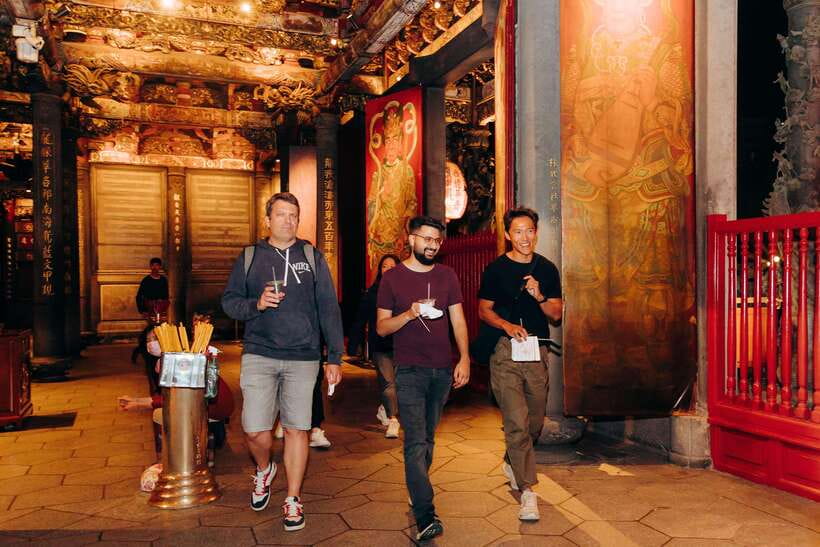
The tour begins at Longshan Temple Station Exit 1, where you look for a guide wearing an orange badge. That is a useful meeting instruction in a busy city. Taipei’s metro stations can have several exits, so using the exact exit matters. I would arrive a little early, check the badge, and keep the help-center link available if you cannot find the group.
The activity lasts about 2.5 hours and returns to the same meeting point. That makes it easy to fit into a day of sightseeing. You are not being left across town at the end, and you can continue exploring the Longshan area or take the metro from the same station.
The tour is conducted in English. The information does not give a group size, so you should not assume a private walk or a tiny party. Still, the tip-based format and the guide’s personal storytelling suggest a more direct experience than a standard hop-on, hop-off sightseeing stop.
More Taipei landmarks and old-street walks:
- Taipei: Taipei 101 Observatory Deck Entry Ticket
★ 4.6 · 847 reviews - Taipei: Classic Landmarks Day Tour
★ 4.8 · 183 reviews - Taipei: Taipei 101 Observatory – Skyline 460 Cloud Walk
★ 4.3 · 36 reviews
Why Taipei’s origins matter here
Longshan Temple is not presented simply as an attractive building. The tour uses it as a doorway into the story of Taipei and the people who built their lives here. You learn how ancestors survived in Taiwan, how communities handled sickness, and how religion helped people make sense of events they could not control.
That context changes the way you look at a temple. A god is not just a statue, and a ritual is not just something colorful for a visitor to photograph. Each practice connects to a practical concern: passing an exam, finding a partner, staying safe at sea, winning a battle, or recovering from illness.
I appreciate this approach because it treats religion as part of ordinary life. You are not asked to view Taiwanese belief from a distance. Instead, the guide explains how people use the temple and why different gods matter to different people.
The tour also focuses on the Taiwanese way of life, not only on dates and architecture. That should suit you if you want social and cultural context. It may be less satisfying if you are looking mainly for a detailed architectural study or a long list of historical dates.
Entering Longshan Temple’s world of folk gods
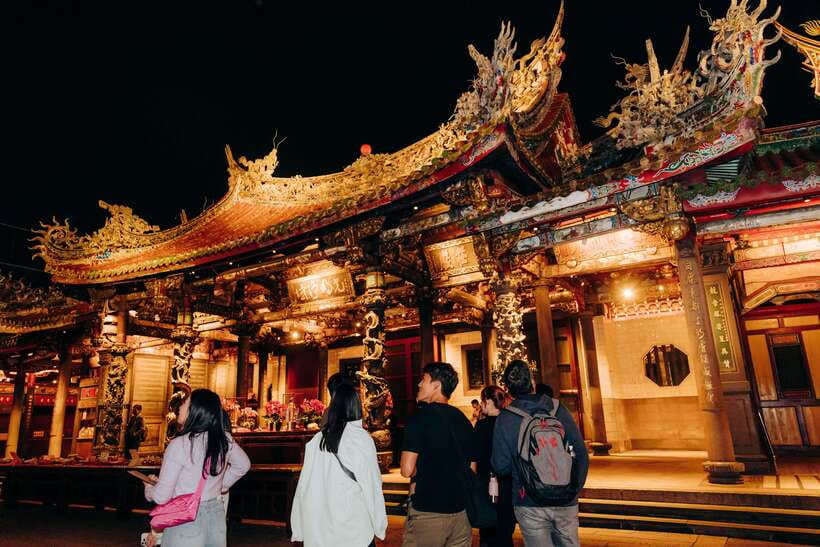
Longshan Temple is known here as a place where more than 100 folk gods are honored. The range is one of the tour’s most interesting features. Different gods oversee different parts of human life, from the sea and battles to education, relationships, and luck.
That arrangement can seem confusing when you first walk through a temple. The guide helps you understand why so many figures are present and how worshippers know where to direct a request. Instead of seeing one general religious space, you begin to see a collection of specialized spiritual concerns.
Two figures receive special attention. Wenchang Dijun is associated with learning, making him important to people hoping for academic success. The Old Man Under the Moon is linked with bringing couples together, so the temple also becomes a place for people concerned with love and marriage.
These examples make the temple easy to relate to. You might not share every belief, but you can understand the human wishes behind them. Someone asking for help with an exam or a relationship is dealing with the same worries people have carried for generations.
The tour also explains the traditions of Buddhism and Taoism that have helped shape Longshan Temple. The information does not present the temple as belonging to only one simple category. That is useful because religious practice in Taiwan can include several traditions in the same setting.
Learning the moonstone ritual
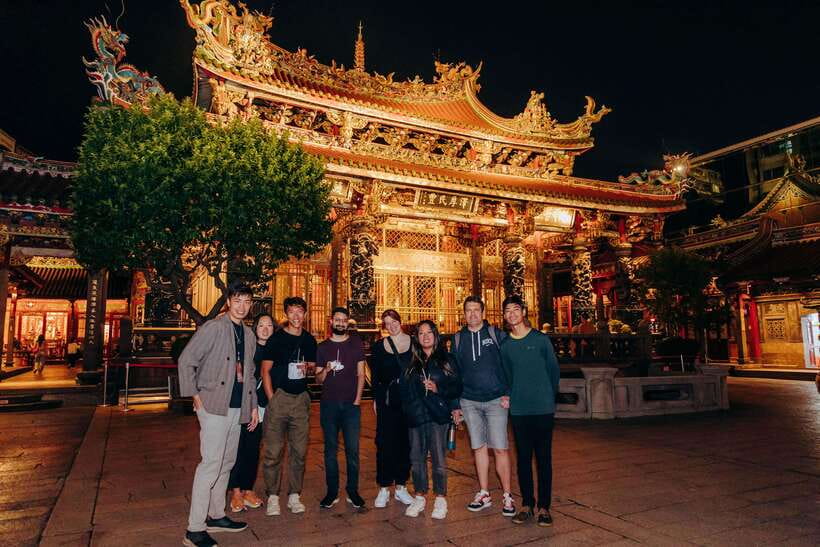
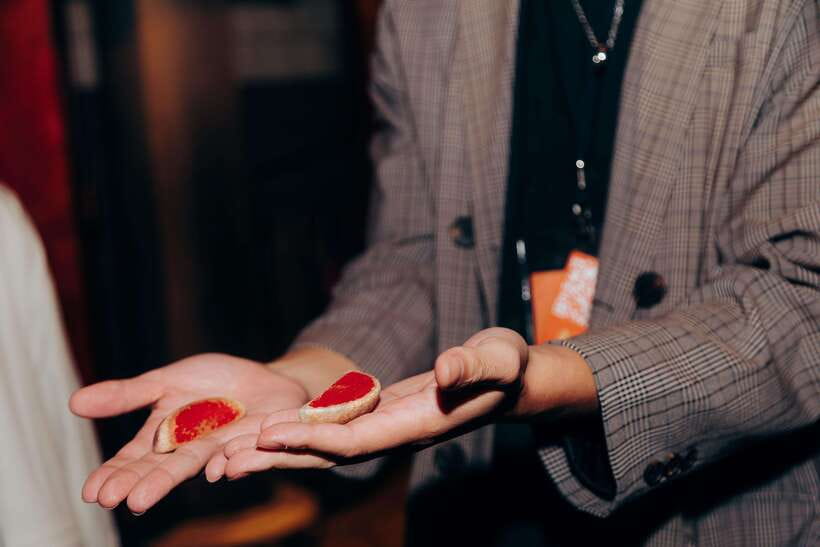
One of the most memorable parts of the experience should be the explanation of moonstones, the small crescent-shaped pieces used to seek an answer from the gods. The guide shows you how to throw them and how to interpret the message.
This is exactly the sort of activity that can be confusing if you try it without context. You need to know how the ritual works and what the result means. With an English-speaking guide beside you, you can ask questions instead of copying what someone else is doing.
The value is not only the possibility of receiving a favorable answer. The ritual gives you a direct way to understand how temple customs operate. You get to see that worship involves action, patience, and interpretation, not only incense and silent prayer.
The experience may include having your fortune read. Treat that as a cultural encounter rather than a guarantee about your future. The useful part is learning why people seek these answers and how fortune practices fit into the wider religious life of the temple.
You should also be respectful. The supplied information does not set out a formal dress code or photography policy, so listen carefully to the guide at the site. A temple is an active place of worship, not a museum display.
More History Tours in Taipei City:
- Taipei: Cooking Class & Market Adventure Historic Dadaocheng
★ 4.9 · 17 reviews - Taipei Foodie + History Walking Tour
★ 5.0 · 10 reviews - Taipei Cooking Class & Market Adventure in Historic Dadaocheng
★ 5.0 · 77 reviews - WoknRoll Taipei Walking and Historical Food Tour
★ 5.0 · 10 reviews
Stories about illness before modern doctors
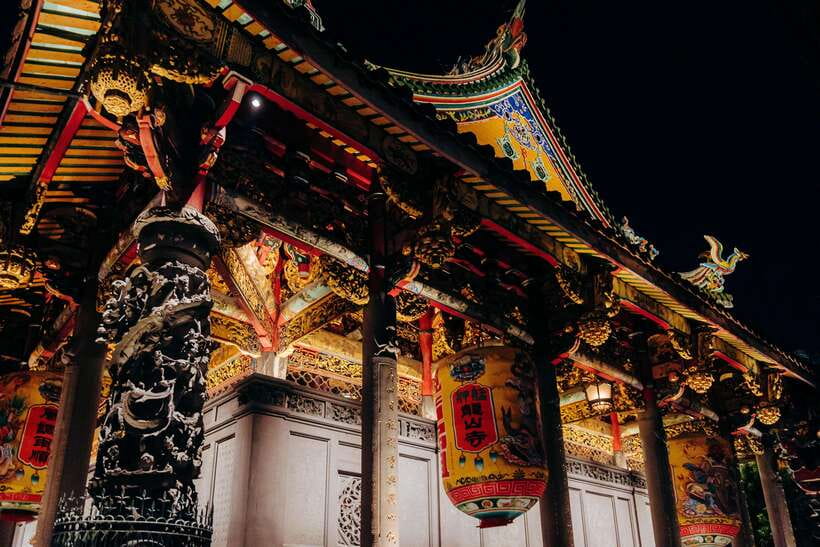
The tour’s discussion of illness adds an important human layer. You learn how Taiwanese ancestors treated sickness before doctors were available. That subject can show how medicine, religion, family knowledge, and hope once worked together.
I find this sort of story more useful than a simple statement that a tradition is old. It explains why spiritual practices became important. When people lacked modern medical care, they still needed ways to respond to pain, uncertainty, and fear.
The tour does not appear to promise a medical demonstration or a visit to a clinic. Instead, the focus is on stories and beliefs. You should approach this part as social history and cultural explanation, not as health advice.
It also helps explain why temples remain meaningful. People may visit with practical concerns, not only for formal religious reasons. A temple can provide ritual, community, comfort, and a way to ask for help when ordinary solutions feel limited.
What the guide adds to the experience
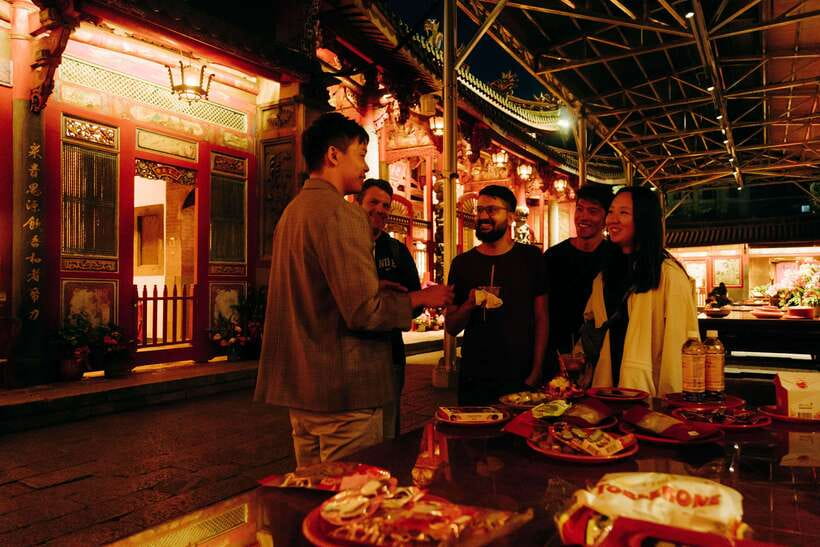
An English-language temple visit depends heavily on the guide. Signs and symbols alone cannot explain the jokes, stories, customs, and small connections between one god and another. This is why the praise for Leo matters.
Leo is specifically described as giving his explanation with clear enthusiasm and doing the work almost as a volunteer. That suggests a guide who cares about sharing the subject, not simply moving a group from one point to the next. His enthusiasm may be especially valuable if you know little about Taiwanese folk religion.
You should still keep your expectations sensible. The available information does not promise that Leo will lead every departure, so do not book solely on the assumption that he will be your guide. The tour is conducted in English, but no details are given about the guide’s training, group size, or the exact route beyond the temple and Taipei’s origin.
A good tip-based guide can make a complex subject feel friendly. I would listen for explanations that connect the gods to daily concerns, and I would ask questions when a ritual seems unfamiliar. That is where this tour is likely to give you the most value.
Is the $1 price really good value?
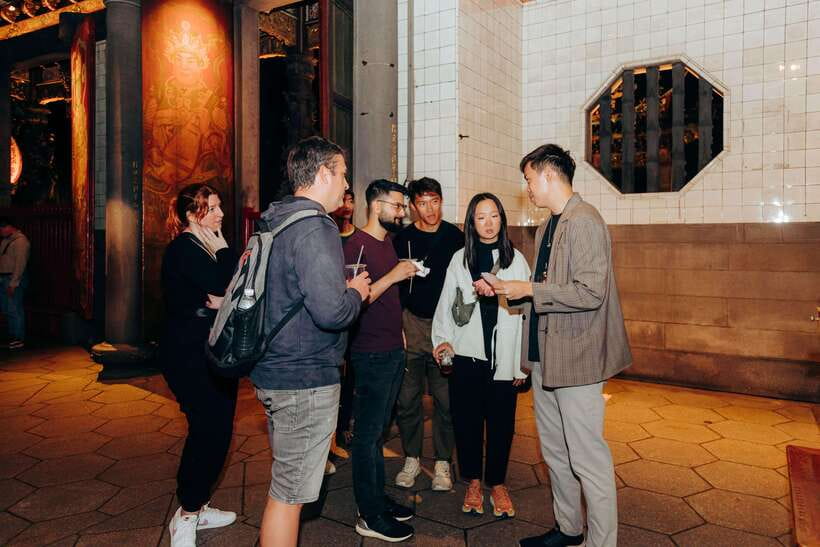
At $1 per person, the booking cost is unusually low. The catch is clear: the guide’s tip is not included. This is a tip-based cultural tour, so the real cost depends on what you choose to give after the walk.
That arrangement can be excellent value if you want an affordable introduction to Taipei culture. You reserve a place without paying the full cost of a conventional guided excursion, and you can judge the experience before deciding on a tip.
It also means you should not treat the $1 as the complete price. Bring enough money for a tip and think of the booking fee as a reservation charge rather than the total cost of the guide service. If you dislike uncertain pricing, this format may feel less comfortable than a fixed-price tour.
The tour’s value comes from interpretation, not transport, meals, or entry tickets. You are paying for an English-speaking person to explain the temple, the city’s beginnings, folk gods, and local practices. If those subjects interest you, the price structure is attractive. If you want a full-day excursion or included attractions, this is not that kind of product.
Timing, meeting point, and the location question
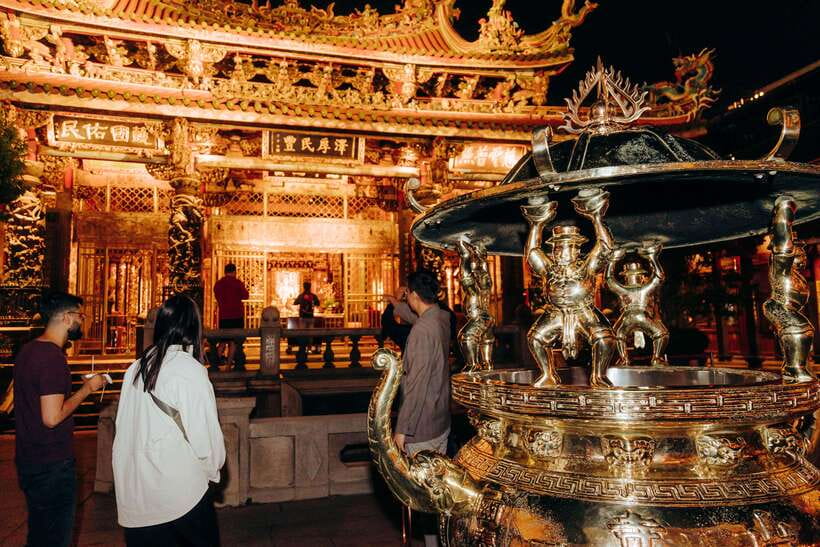
The stated duration is 2.5 hours, with starting times shown according to availability. That is long enough for a proper introduction without taking over your entire day. You can plan a morning or afternoon around it, but confirm the departure time when booking.
The activity ends back at the starting point. This is practical if you want to continue at Longshan Temple or use the metro afterward. It also reduces the risk of finishing in an unfamiliar part of Taipei.
One detail deserves attention. The location is listed as Nantou County, while the start point is Longshan Temple Station Exit 1 in Taipei. Those places are not the same destination. Because the meeting instructions are specific to Taipei, you should verify the current booking page and confirmation before setting out, especially if you are staying outside Taipei or planning a day trip.
For finding the group, look for the orange badge. If you have trouble, the provided help center is the right place to check. This is a simple step, but it can save time in a crowded station area.
Who will enjoy this walking tour most?
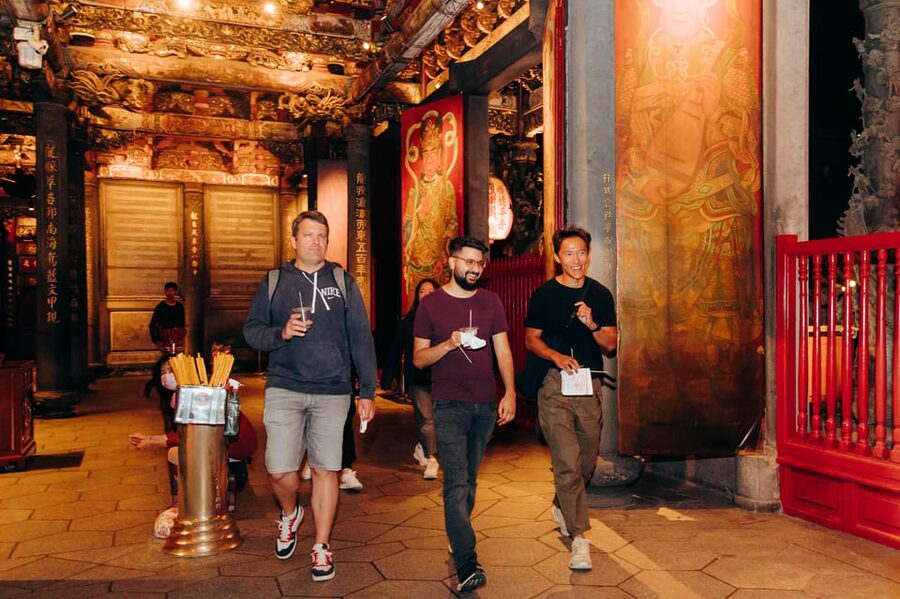
I would recommend the tour to you if you enjoy learning through stories. It suits first-time visitors who want to understand what they are seeing at Longshan Temple rather than simply take photographs and leave.
It is also a good fit if you are curious about:
- Taiwanese folk religion
- Buddhist and Taoist traditions
- Local beliefs about luck, learning, health, and relationships
- The early story of Taipei
- Temple rituals and fortune practices
- Everyday life before modern medical care
Families and older children may find the many gods and fortune rituals easier to remember than a lecture filled with dates. The activity is also useful for solo visitors who want a cultural orientation in English.
You may want something else if you prefer a fixed-price private tour, a tightly scheduled historical walk, or a route covering many Taipei landmarks. The available details focus on Taipei’s origin and Longshan Temple, not a broad city tour.
Practical advice for making the most of it
Wear comfortable shoes. The activity is a walking tour lasting 2.5 hours, and the information does not indicate that transport is included.
Arrive at Longshan Temple Station Exit 1 with the confirmation details ready. Look for the orange badge, and do not wander to another exit before checking the meeting instructions.
Bring questions. Ask about the gods, the moonstones, the relationship between Buddhism and Taoism, and the old approaches to illness. The tour’s greatest strength is the chance to connect unfamiliar rituals with ordinary human needs.
Keep cash available for the tip. The $1 fee does not cover it, and the tip is part of the tour’s stated payment structure.
Finally, leave room for personal observation. You can learn from the guide and still spend a quiet moment noticing how the temple functions as a place of worship. That balance will give you more than rushing through every detail.
Should you book Taipei’s Origin and Longshan Temple tour?
Book it if you want an affordable, story-led introduction to Taiwanese culture. The moonstone ritual, the many folk gods, and the focus on life before modern doctors give this tour more character than a basic temple explanation.
The strongest reason to choose it is the guide’s role. Leo’s enthusiasm is a promising sign, though guide assignment is not guaranteed. The $1 price is appealing, but remember that a tip is separate and the location information needs checking because Nantou County and Taipei are listed together.
I would book this for a first or second day in Taipei, especially if you want cultural context before visiting more temples on your own. I would skip it only if you need a fixed all-inclusive price, a private group, or a tour covering a wide range of city sights.
FAQ
Where does the tour start?
The tour starts at Longshan Temple Station Exit 1 in Taipei. Look for the guide wearing an orange badge.
Where does the activity end?
The tour ends back at the meeting point.
How long does the tour last?
The activity lasts 2.5 hours. Starting times depend on availability.
What language is the tour in?
The tour is conducted in English by a live English-speaking guide.
Is the guide’s tip included in the $1 booking fee?
No. The guide’s tip is not included in the booking fee.
What does the tour explain about Longshan Temple?
It explains the temple’s long history, folk gods, Buddhist and Taoist traditions, and the role of the temple in Taiwanese life.
Can I learn how to use moonstones?
Yes. The guide shows you how to throw moonstones and interpret the messages connected with the ritual.
Which folk gods are discussed?
The tour includes Wenchang Dijun, associated with learning, and the Old Man Under the Moon, associated with bringing couples together. It also explains that more than 100 folk gods are honored at Longshan Temple.
Can I cancel the booking?
You can cancel up to 24 hours in advance for a full refund. The reserve-now-and-pay-later option lets you hold a place without paying the booking fee immediately.
Just listed around Taipei City
- Vintage Taipei – Best of Taiwan and Sunset Walking Tour★ 5.0 · 4 reviews
- Taiwan Taipei: Quick Photoshoot with Taiwan Photographer★ 5.0 · 9 reviews
- Taiwan Museum, MOCA Taipei & Miniatures Museum Entry Tickets★ 4.4 · 2 reviews
- Taipei: Taiwan Traditional Breakfast & Market & Tea Tasting★ 5.0 · 6 reviews
- Taipei: Unlimited FunPass – Transports & Attractions Pass★ 4.5 · 14 reviews
- Taipei: Yangmingshan, Shifen, Jiufen & Yehliu Private Tour★ 4.9 · 11 reviews
- Taipei: Yangmingshan National Park Half-Day Tour★ 4.3 · 12 reviews
- Taipei Private Custom Tour with a Local: Icons & Hidden Gems★ 3.7 · 6 reviews
Taipei Landmarks & Old Town, compared.


Priority Pass Taipei 101 Observatory Deck Ticket
Read our review →
Taipei City Morning Tour with National Palace Museum entry
Read our review →
Taipei Old Town – Taiwan Introduction Walking Tour (Tip-Based)
Read our review →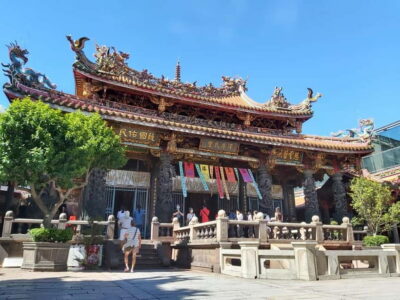
Morning City Tour with National Palace Museum Entry
Read our review →
Yehliu & Jiufen & Shifen Day Tour (Departure from Ximending)
Read our review →Browse the lists this tour appears in