
Reviewed · WALKING TOURS
Vintage Taipei – Best of Taiwan & Sunset Walking Tour (Tip-based)
Old Taipei still knows how to surprise you. This tip-based walking tour links a century-old tea factory, traditional temples, Chinese medicine shops, and Dadaocheng’s old trading streets in a compact afternoon outing. I like the mix of everyday culture and historical buildings, and I especially like that the route ends beside the river with Taiwanese honey lager and food-market views.
The $5 price makes this an easy way to get oriented, especially if you want local context without committing to a full-day excursion. My main caution is the tip-based format: one guest felt the expected tip was repeated too often, and another found the guide spoke too quickly. Your experience may depend heavily on the guide leading your group.
In This Review
- Four things to know before you go
- Why this short walk works well in Taipei
- Starting near Mikkeller Bar at 2:30 pm
- Tea roasting in a century-old factory
- Fa Zho Gong Temple and its unusual elevator
- Taipei Xia Hai City God Temple and 月老
- Dadaocheng, Dihua Street, and the old trading district
- Chinese herbs, dried goods, and old-fashioned shopping
- Local foods and a honey lager at the river
- Is the $5 price really good value?
- Who will enjoy this Taipei walk?
- Should you book Vintage Taipei?
- FAQ
- How much does Vintage Taipei cost?
- How long does the tour last?
- What time does the tour start?
- Where does the tour begin?
- Where does the tour end?
- Is tea included?
- Is beer included?
- What places does the tour visit?
- How many people can join the tour?
- Can I cancel the booking?
Four things to know before you go
- The route focuses on old Taipei: This is a Dadaocheng and Dihua Street experience, not a broad survey of the whole city.
- Tea is part of the tour: You visit a century-old tea factory, see traditional roasting, and sample tea.
- The temples offer different stories: Fa Zho Gong Temple brings an unusual modern feature, while Taipei Xia Hai City God Temple is linked with 月老, the Chinese Cupid.
- The finale is social and scenic: The walk finishes at Dadaocheng Wharf Plaza, where you can buy local food and enjoy discounted Taiwanese honey lager.
- The $5 price is only the starting point: You pay the listed amount, then decide what the guide’s work was worth as a tip.
- Plan for a two-and-a-half-hour walk: The tour begins at 2:30 pm and requires good weather.
Why this short walk works well in Taipei
Taipei can feel modern, fast, and heavily built up. Dadaocheng gives you a different view. Its old streets are tied to tea, dried goods, medicine, temples, and river trade, so the area helps explain how Taipei developed as a working port city.
I like this route because it does not depend on one grand sight. Instead, it builds a picture from small details: a tea-roasting technique, a temple custom, a shop full of herbs, a historic street front, and a final drink by the water. You get a sense of how tradition still fits into daily city life.
The tour lasts about 2 hours and 30 minutes, which is long enough to make the district meaningful but short enough to leave room for dinner or another evening plan. It is also a useful first-afternoon activity if you have just arrived and want a gentle introduction to Taipei’s older side.
The group can include up to 20 people. That is large enough for a social outing but small enough for a guide to manage the walk and gather people at each stop. Since the route includes markets and streets rather than a single enclosed attraction, staying close to the group will matter.
More Walking Tours in Taipei:
- Taipei Old Town – Taiwan Introduction Walking Tour (Tip-Based)
★ 5.0 · 175 reviews - [Private Tour] Shilin Night Market Walking Tour With a Private Tour Guide (2-hr)
★ 5.0 · 123 reviews - Taipei: 2-Hour Raohe Night Market Walking Tour
★ 4.6 · 69 reviews
Starting near Mikkeller Bar at 2:30 pm
The meeting point is Mikkeller Bar Taipei at No. 241, Nanjing West Road, in Datong District. The tour starts at 2:30 pm, so I would arrive a little early rather than trying to find the group at the last minute.
The starting location also gives you a useful clue about the experience. This is not a formal coach excursion with a long transfer out of Taipei. You meet in the city and begin exploring on foot, moving toward the old Dadaocheng area.
A mobile ticket is provided, and booking confirmation arrives at the time of booking. The tour is near public transportation, which makes the start practical for most visitors staying in central Taipei. Service animals are allowed, and most people can take part.
The timing is one of the tour’s best features. A mid-afternoon start leaves your morning open, while the late finish places you near the river around sunset. It also means you should eat lightly beforehand if you expect to sample food at the end.
Tea roasting in a century-old factory
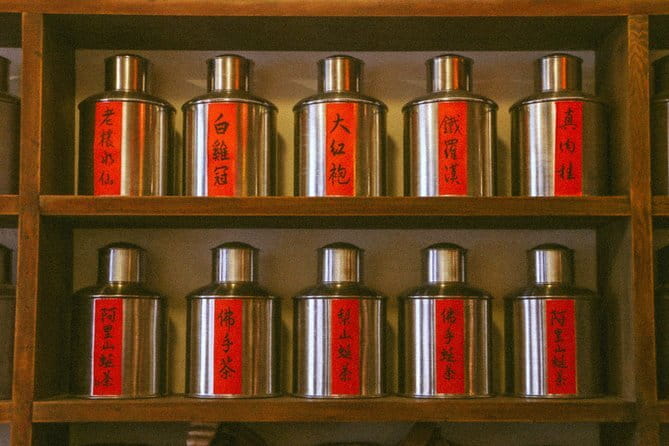
The first major experience is a historic tea factory. Here you can watch traditional roasting in action and take part in a tea tasting, with coffee and tea included as part of the experience.
This stop matters because Taiwanese tea is not presented as an abstract souvenir or a quick sample in a shop. You see part of the work behind it. Roasting changes the character of tea, and watching the process gives the tasting a stronger connection to local craft.
I like this kind of introduction because it sets the tone for the rest of the walk. You are not simply passing old buildings while a guide lists dates. You are learning through things people still make, sell, drink, and use.
The tea stop may be the most appealing part for anyone interested in food culture, traditional trades, or Taiwanese products. It also gives you a quiet pause before the temple and market sections become more active.
Do not expect a full tea workshop or a long educational seminar. The tour description promises a demonstration and tasting, not a detailed lesson in every tea-growing region of Taiwan. If tea is your main interest, treat this as a good introduction rather than a specialist visit.
Fa Zho Gong Temple and its unusual elevator

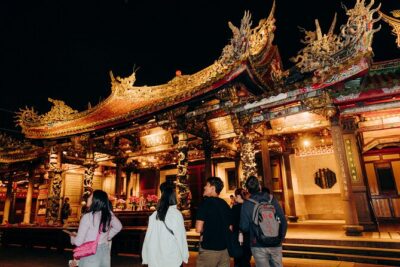
Fa Zho Gong Temple dates to 1869 and offers one of the route’s more unusual details: it is described as the only temple in Taiwan with an elevator. That feature creates an interesting contrast between old religious traditions and modern convenience.
The temple is also presented as a place where tradition and newer urban life meet. You get more from the visit if you pay attention to the building as a working place of worship, not simply as an old architectural stop.
A guide can help explain what you are seeing, which is especially useful if you are unfamiliar with Taiwanese temple customs. The tour’s value here is not only the date or the elevator. It is the chance to see how a historic temple remains part of the city rather than sitting apart from it.
Because this is a walking tour with several stops, the temple visit is likely to be focused. You should not expect extensive time for quiet personal exploration. Still, it gives the route a strong cultural anchor before you continue into the surrounding streets.
More Evening Tours in Taipei:
- Taipei: Jiufen Night View and Shifen Day Tour
★ 4.6 · 870 reviews - Taipei: Street Food & Hidden Eats Night Market Food Tour
★ 4.8 · 112 reviews - Taipei Food Tour: Night Market & Convenience Store(Food Included)
★ 4.5 · 100 reviews - 2-hr Raohe Night Market Walking Private Tour with a Tour Guide
★ 5.0 · 61 reviews
Taipei Xia Hai City God Temple and 月老
The second temple is Taipei Xia Hai City God Temple, built in 1856. It is especially associated with 月老, often described as the Chinese Cupid, and is known for its importance to people seeking help with romance and relationships.
This is a good example of how the walk connects history with living belief. You are not just looking at a preserved structure. You are hearing why the temple remains meaningful and why particular figures draw attention.
The contrast between the two temples makes this part more interesting than visiting two similar religious buildings. Fa Zho Gong offers the memorable elevator detail and its blend of old and new. Xia Hai City God Temple brings a strong connection to popular devotion and local customs.
Temple visits require a little awareness from you. Follow the guide’s instructions, keep your voice low when appropriate, and allow people who are there to worship to use the space without disruption. The tour is designed to explain the setting, not turn it into a theatrical performance.
Dadaocheng, Dihua Street, and the old trading district
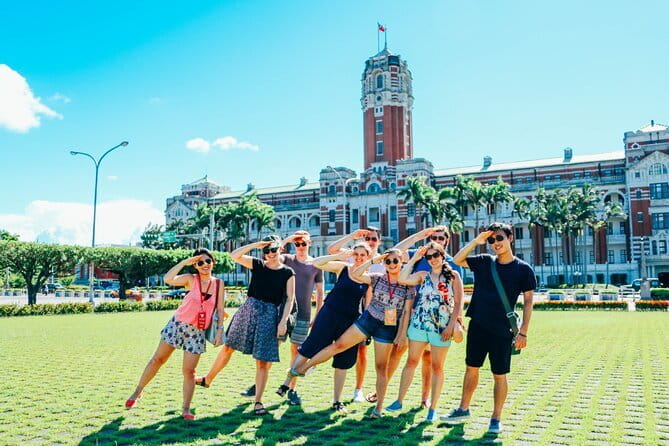
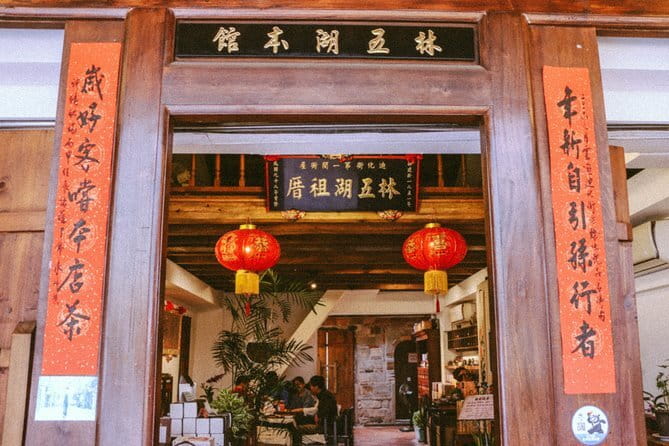
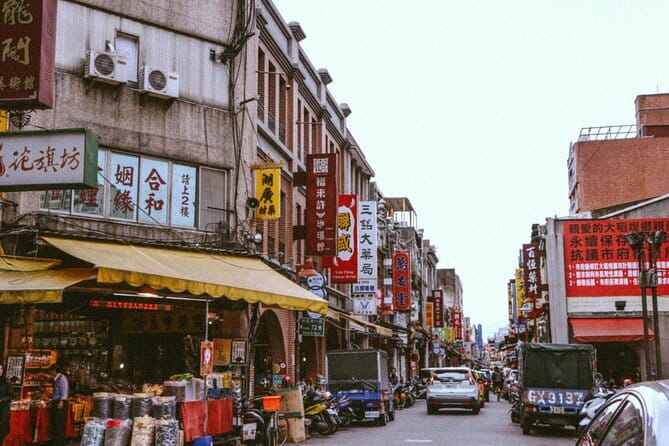
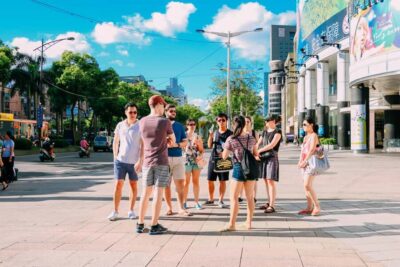
The route then opens into Da Dao Cheng, also commonly written as Dadaocheng, with Dihua Street forming an important part of the old district. This is the heart of the experience.
The neighborhood is known for traditional architecture, old commercial buildings, and streets connected with trade. The tour focuses on the area’s past as well as its present-day shops and local culture. You can expect a walk through streets where the buildings and businesses tell a story together.
I like the idea of exploring this area with a guide because the best details are easy to miss when you walk alone. A plain-looking storefront may connect to tea, dried goods, medicine, or an older form of trade. A guide can turn those details into a clear picture of the district.
The route is described as a secret district known mainly to locals, but I would treat that phrase as promotional language rather than a literal claim. Dadaocheng is an established part of Taipei’s old city. Its appeal comes from seeing it in context, not from pretending it is completely unknown.
Several direct comments about the guides point to the strongest part of the tour. Bessy, also written as Bessie in one account, is praised for her enthusiasm and affection for Dihua Street. Leo is described as kind and well informed about the old city, while Ale is also praised for a friendly manner and clear local knowledge.
That matters because this route depends more on storytelling than on entry tickets. A good guide helps you connect the tea factory, temples, shops, and port district. A weaker guide could make the same walk feel like a fast list of addresses.
Chinese herbs, dried goods, and old-fashioned shopping
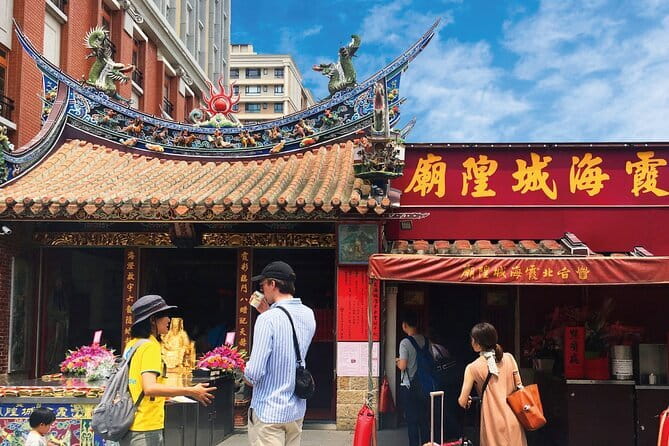
The Chinese herbal and dry products market adds another layer to the district. You can browse shops connected with traditional Chinese medicine and see the kinds of herbs and dried products that have been used for centuries.
This stop works best if you are curious rather than already an expert. You may encounter unfamiliar ingredients and shop displays that make little sense at first glance. The guide’s explanation gives you a starting point for understanding why these products matter in Taiwanese daily life.
It is also one of the more authentic parts of the walk because the market is not built only for sightseeing. These shops serve practical purposes, and the products connect food, health, family tradition, and commerce.
The limitation is that the experience may feel less accessible if the guide speaks too quickly. One guest specifically raised that concern. If you have trouble following, ask the guide to slow down or repeat a point. The group size of up to 20 can make it harder to hear in a busy market, so staying near the guide is sensible.
You should also avoid treating unfamiliar herbs as something to sample casually. The tour provides cultural context and browsing, not medical advice. Enjoy the displays, ask questions, and leave any purchasing decisions until you understand what you are being shown.
Local foods and a honey lager at the river

The final stop is Dadaocheng Wharf Plaza, beside the river. The tour ends at a lively food market where you can look for local dishes and enjoy sunset views with a discounted glass of Taiwanese award-winning honey lager.
This is a smart ending. After two hours of walking, you get a chance to sit, eat, and keep talking with the group rather than ending at a random street corner. The river setting also gives the afternoon a clear finish, especially as the light changes toward sunset.
The beer is not simply an add-on. It connects the old port area with Taipei’s current food and drink culture. A honey lager offers something different from the standard beer stop, and the discount adds practical value to a tip-based experience.
Food is not described as included, so bring money if you want to eat at the market. The beer discount is included as a benefit, but the exact price is not provided. You should also remember that sunset conditions depend on the weather and the time of year.
The end point is not the same as the beginning. Dadaocheng Wharf Plaza is in Datong District, so you can continue with food or make your own way back by public transportation after the tour.
Is the $5 price really good value?
At $5 per person, this is an unusually low entry price for a guided city walk. You receive a certified guide, traditional tea tasting, and a discounted beer at the end. Those inclusions make the listed price excellent value if you want orientation and cultural context without paying for a standard premium tour.
The important catch is the tip-based model. The $5 payment does not represent the full value expected for the guide’s work. You should budget for a tip if the guide gives you a useful, engaging afternoon.
This format can work well when the guide is strong. You pay a modest amount upfront and have a chance to judge the experience before deciding what to add. Bessy, Leo, and Ale are all identified as guides associated with positive experiences, but the guide assigned to your departure may differ.
The model also creates a clear point of tension. One guest felt uncomfortable being reminded several times about the expected tip and felt the company should simply charge a proper price. That is fair criticism. If you dislike tip-based tours, this may not be the right fit, even at a low starting price.
Who will enjoy this Taipei walk?
I would choose this tour if you want a short, human-scale look at Taipei’s old port district. It suits first-time visitors who want local orientation, as well as returning visitors who have already seen the city’s major modern sights.
It is particularly good for you if you enjoy:
- Traditional food and drink
- Temple customs and local belief
- Old commercial streets
- Tea and Chinese medicine
- Small-group walking tours
- Finishing the day at a food market
You may want another option if you want Taipei 101, major museums, night markets across several districts, or a broad overview of the entire city. This experience stays focused on Dadaocheng and nearby old Taipei.
Wear comfortable shoes and plan around the weather. The walk lasts 2 hours and 30 minutes, and the experience can be canceled for poor weather. If that happens, you are offered another date or a full refund. You can cancel for a full refund up to 24 hours before the start time, but changes made later are not accepted.
Should you book Vintage Taipei?
Book it if you want an affordable, focused introduction to old Taipei. The best reasons are the tea-roasting visit, the two distinct temples, the old trading streets, and the riverfront finish with food and honey lager.
Go in with sensible expectations. This is not a complete Taipei tour, and the quality may depend on the guide’s pace and style. Ask for slower explanations if needed, and decide in advance how you feel about tipping.
For a small upfront cost and a clear focus on Dadaocheng, I think it is a strong choice for an afternoon. It gives you stories, tastes, temples, and a sunset without taking over your whole day.
FAQ
How much does Vintage Taipei cost?
The listed price is $5 per person. It is a tip-based experience, so you should also consider leaving a tip for the guide.
How long does the tour last?
The tour lasts approximately 2 hours and 30 minutes.
What time does the tour start?
The tour starts at 2:30 pm.
Where does the tour begin?
The meeting point is Mikkeller Bar Taipei, No. 241, Nanjing West Road, Datong District, Taipei City.
Where does the tour end?
The tour ends at Dadaocheng Wharf Plaza in Datong District, beside the river.
Is tea included?
Yes. Traditional tea tasting is included, along with coffee and/or tea.
Is beer included?
A discounted beer is included as a tour benefit. The final stop features Taiwanese award-winning honey lager.
What places does the tour visit?
The route includes a century-old tea factory, Fa Zho Gong Temple, Taipei Xia Hai City God Temple, Da Dao Cheng, the Chinese herbal and dry products market, and the Dadaocheng riverfront food market.
How many people can join the tour?
The maximum group size is 20 people.
Can I cancel the booking?
You can cancel at least 24 hours before the start time for a full refund. If poor weather causes the tour to be canceled, you are offered a different date or a full refund.
Just listed around Taipei
- Vintage Taipei – Best of Taiwan and Sunset Walking Tour★ 5.0 · 4 reviews
- One Day Tour of Yilan, Zhang Mei Ama Farm★ 5.0 · 2 reviews
- Private Yangmingshan National Park Hiking Day Tour from Taipei★ 5.0 · 5 reviews
- Yilan 1-Day Private Tour to Kavalan Whisky & Cultural Gems★ 4.5 · 3 reviews
- Keelung Shore Excursion: Private 6H Natural Wonder & Seafood Tour★ 5.0 · 3 reviews
- One-day Yangmingshan NP Beitou Hot Spring Park and Tamsui Tour Package★ 5.0 · 2 reviews
- Yangmingshan National Park & Hot Spring Tour (afternoon )★ 3.0 · 2 reviews
- Xiao Long Bao, Chicken vermicelli with mushroom and sesame oil, Tofu strips salad, Bubble milk tea. Taiwan Traditional Delicacies Experience-A (Taipei Cooking Class)★ 5.0 · 8 reviews
Walking Tours, compared.
Taipei Old Town – Taiwan Introduction Walking Tour (Tip-Based)
Read our review →
Shilin Night Market Walking Tour With a Private Tour Guide (2-hr)
Read our review →
2-hr Raohe Night Market Walking Private Tour with a Tour Guide
Read our review →
Taipei’s Origin & Longshan Temple – Taiwan Cultural Walking Tour
Read our review →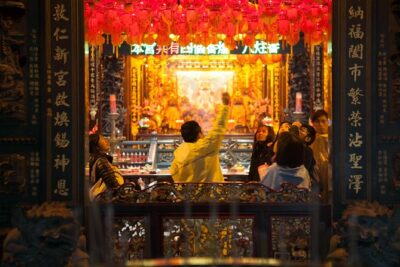
Private Keelung Cultural Walk: Markets, Streets & Local Life
Read our review →Browse the lists this tour appears in